
See the Fraser Valley – Photos, History and Day Trips
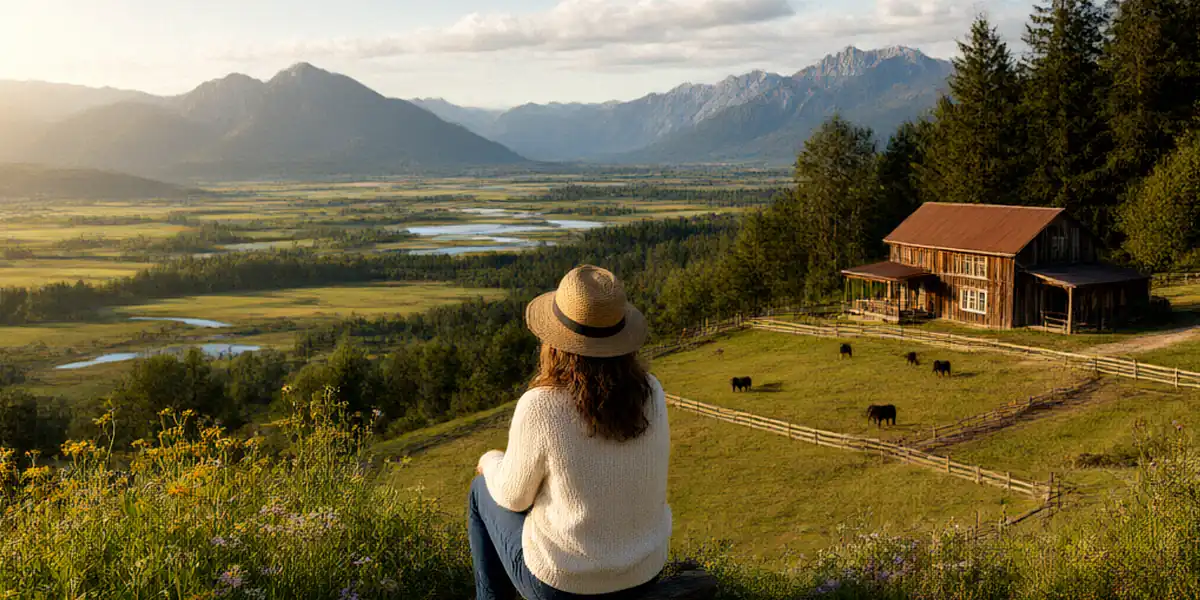
Mist rises off the Fraser River at dawn, curling between the pilings of an old fishing dock while the first light catches the peaks above Chilliwack. A blue heron waits, perfectly still, and somewhere upstream a train horn echoes through the valley. This is the scene we wake up to, or drive twenty minutes to find, depending on which side of the valley we call home. The Fraser Valley isn’t a place you pass through on your way to Vancouver — it’s a destination with its own rhythm, its own stories, and more photo opportunities per kilometre than almost anywhere else in British Columbia. We’ve spent years wandering its backroads, hiking its trails, and filling memory cards at its lakes and lookouts. This guide is our attempt to share what we’ve found: the history, the day trips, and the golden-hour spots that keep pulling us back.
Why We Call the Fraser Valley Our Backyard
We call the Fraser Valley our backyard because, quite simply, it’s where we live, work, and shoot. Stretching from the suburban edges of Langley through Abbotsford and Chilliwack to the historic town of Hope BC, the valley is a patchwork of farmland, forest, river, and mountain that changes character every twenty minutes of driving. For locals, it’s home. For visitors, it’s an easy escape from Vancouver that feels a world away — and it works in every season.
A Valley Shaped by the Fraser River
Everything here begins with the Fraser River. It’s one of the longest rivers in Canada, and through this valley it runs wide, silty, and powerful, carrying snowmelt from the Rockies to the Pacific. The river carved the valley floor over thousands of years, depositing the rich sediment that makes this one of the most productive agricultural regions in the province. When you bite into a local blueberry or corn on the cob in August, you’re tasting the Fraser River’s work.
The river also shaped human history here. For thousands of years, the Stó:lō people lived along its banks, using its salmon runs as the foundation of a sophisticated culture that endures today. In 1808, Simon Fraser travelled down the river on a gruelling expedition, and by the mid-1800s the river was the highway that carried gold seekers north to the Fraser Canyon. The river is still a working waterway, a recreation corridor, and the single most photographed subject in the region — especially at dawn, when the mist hangs low and the water turns to silver.
We love that the Fraser River is never far away. From the dykes around Abbotsford to the sandbars near Hope BC, you can always find a quiet stretch of shoreline, a heron, and a reason to stop the car. If you’re chasing photos, the river gives you something different every hour of the day.
From Abbotsford to Hope: Our Favourite Stops
The valley’s geography is easy to understand once you’ve driven it end to end. Highway 1 runs along the north side; Highway 7 hugs the river on the south. Between them, a lattice of country roads connects the communities that make this region feel like a series of small worlds stitched together.
Here’s how we think about the valley, west to east:
- Abbotsford – The valley’s largest city, with a historic downtown, a thriving farm economy, and quick access to both the U.S. border and the mountains.
- Chilliwack – Farmland, rivers, and lakes, including Cultus Lake and Chilliwack Lake. This is where outdoor recreation meets agricultural roots.
- Harrison Hot Springs – A resort village on the shore of Harrison Lake, famous for its mineral pools and dramatic mountain backdrop.
- Hope BC – The gateway to the Fraser Canyon and Manning Park, with a pioneer past, chainsaw carvings, and the Othello Tunnels nearby.
- Agassiz and Harrison Mills – Quiet farming communities with heritage sites, birdwatching, and some of the best sunrise light in the valley.
We often recommend visitors pick two or three of these as anchors and let the roads between them do the rest. The valley rewards slow travel. A twenty-minute detour for a farm stand or a riverside pullout is almost always worth it.
When to Visit: Seasonal Highlights
One of the reasons we never run out of things to photograph here is that the valley has four genuinely distinct seasons, each with its own palette.
Spring brings the Abbotsford Tulip Festival, when fields of colour draw photographers from across the province. It’s also when the valley greens up, the waterfalls run full, and the first farm stands open. Summer is lake season — Cultus Lake and Harrison Lake fill with swimmers, paddlers, and families — and the corn mazes and berry farms hit their stride. Autumn is arguably the most photogenic stretch, with misty mornings, golden cottonwoods along the river, and pumpkin patches. Winter quiets things down, but it also brings snow-dusted mountains, moody river fog, and the soothing steam of Harrison Hot Springs on a cold day.
If you’re planning a first visit and want the greatest variety, we’d point you to late September or early October. The light is soft, the crowds are thinner, and the valley looks like it was designed for a camera.
Chilliwack and Abbotsford: Farmland, Culture, and Community
If the Fraser River is the valley’s spine, Chilliwack and Abbotsford are its heart. These two communities anchor the central valley, and between them you’ll find the region’s best mix of agriculture, outdoor adventure, and small-town culture. We spend more time here than anywhere else, and it’s where we take visiting friends first.
Cultus Lake and Chilliwack Lake Adventures
Cultus Lake is the valley’s summer playground, and for good reason. The water is clear and cold, the shoreline is forested, and the surrounding hills catch beautiful late-afternoon light. There’s a provincial park with campsites, a day-use area, and a network of trails that range from easy lakeside strolls to steeper climbs with rewarding views. On a hot July day, there’s nowhere we’d rather be.
Just up the road, Chilliwack Lake offers something wilder. The drive in follows the Chilliwack River through a corridor of cedar and hemlock, with pullouts along the way for river access and photos. The lake itself sits in a deep valley with mountains rising on all sides — the kind of scene that makes wide-angle lenses feel essential. The water is glacier-fed and bracingly cold, but on a still morning the reflections are worth the trip alone.
Between the two lakes, there’s no shortage of ways to spend a day. A few of our favourites:
- Paddleboarding or kayaking on Cultus Lake in the early morning before the wind picks up
- Hiking the Vedder River Trail, a flat, family-friendly route with excellent birdwatching
- Swimming at Chilliwack Lake’s day-use beach, then warming up with a picnic in the sun
- Fishing the Chilliwack River for salmon in the fall, when the banks fill with anglers
- Camping at Cultus Lake Provincial Park and waking up to mist on the water
We’d add one caution: these lakes are popular, and parking fills early on summer weekends. Arrive before nine in the morning if you want a stress-free start.
Abbotsford’s Agricultural Roots and Markets
Abbotsford is one of the most productive farming areas in British Columbia, and it wears that identity proudly. The city sits on some of the richest soil in the province, and the surrounding countryside is a patchwork of berry fields, dairy farms, and greenhouses. In spring, the Abbotsford Tulip Festival transforms a stretch of farmland into rows of brilliant colour — it’s one of the most photographed events in the Fraser Valley, and for good reason. Go early, bring a wide lens and a macro, and expect to spend longer than you planned.
Beyond the tulips, Abbotsford’s agricultural scene shows up in its markets and farm stands. The Abbotsford Farm and Country Market runs through the warmer months, with local produce, baked goods, and crafts. Out in the countryside, you’ll find u-pick berry farms in summer, pumpkin patches in fall, and corn stands that seem to appear at every intersection in August.
We also love Abbotsford’s historic downtown, which has been quietly revitalizing over the past decade. Independent cafés, a restored theatre, and a growing roster of restaurants make it worth an afternoon. The Trethewey House Heritage Site offers a glimpse into the city’s early days, and the Reach Gallery Museum showcases local art and history. It’s a good rainy-day stop when the fields are too muddy for photos.
Family-Friendly Attractions We Love
The central valley is genuinely great for families, and we’ve tested most of it with kids in tow. The Chilliwack Corn Maze is a fall tradition — a sprawling puzzle cut into a cornfield, with a new design each year, plus pumpkins, hayrides, and hot cider. It’s the kind of place where you plan to stay an hour and end up staying three.
Other family favourites we keep coming back to:
- Cultus Lake Waterpark – A summer staple with slides and pools for all ages
- Castle Fun Park in Abbotsford – Mini-golf, go-karts, and arcade games under one roof
- Greater Vancouver Zoo in Aldergrove – A full day out with kids, with plenty of shaded picnic spots
- Bridal Veil Falls – A short, easy walk to a dramatic waterfall that kids love
- Farmers’ markets across both cities – Great for letting kids pick their own snacks and meet local growers
What we appreciate most is that none of these require a huge time commitment. You can string two or three together in a day without feeling rushed, and still have time for a sunset stop on the way home.
Hope BC and Harrison Lake: History and Hot Springs
Head east from Chilliwack and the valley narrows, the mountains close in, and the character shifts. Hope BC and Harrison Lake are the eastern anchors of the Fraser Valley, and together they offer the region’s richest blend of history, relaxation, and dramatic scenery. This is where we go when we want a slower pace and a longer soak.
Hope’s Chainsaw Carvings and Pioneer Past
Hope BC has a story that surprises a lot of first-time visitors. Long before it became a highway junction, it was a key stop on the Fraser River gold rush route in the 1850s, and later a supply town for the fur trade and the railways. That pioneer past still shows in the town’s heritage buildings, the old waterfront, and the museums that document its role in shaping the province.
What Hope is most famous for today, though, are its chainsaw carvings. Every year, the town hosts a carving competition that draws artists from around the world, and the resulting sculptures are scattered throughout the community — bears, eagles, salmon, and figures from local Indigenous and pioneer history, all carved from massive cedar logs. It’s a free, self-guided outdoor gallery, and it makes for a genuinely fun afternoon of photography. We recommend starting at the visitor centre, picking up a map, and wandering at your own pace.
Beyond the carvings, Hope is the gateway to some serious wilderness. The Fraser Canyon begins here, and the surrounding mountains offer hiking, fishing, and some of the most dramatic river scenery in British Columbia. The Othello Tunnels, just a short drive away, are a must-see — more on those below.
Harrison Hot Springs: Soak and Unwind
Harrison Hot Springs is the valley’s classic getaway. The village sits on the western shore of Harrison Lake, and its namesake mineral pools have been drawing visitors for well over a century. The water comes out of the ground warm and rich in minerals, and there’s something almost medicinal about sinking into it on a cool morning while mist drifts off the lake.
The public pool at Harrison Hot Springs Resort is the most famous option, but there are also private and semi-private soaking options around town. We like to visit in the shoulder seasons — late fall and early spring — when the crowds thin out and the steam rising off the water is at its most photogenic. Winter is also wonderful: there’s nothing quite like soaking in hot mineral water while snow dusts the mountains across the lake.
Beyond the pools, the village itself is walkable and relaxed. There are cafés, ice cream shops, and a lakeside promenade that’s perfect for an evening stroll. We often make a full day of it: soak in the morning, lunch in the village, then an afternoon on the water or a hike in the surrounding hills.
Harrison Lake Boat Tours and Beaches
Harrison Lake is enormous — over sixty kilometres long — and its shoreline is a mix of sandy beaches, rocky outcrops, and forested slopes that drop straight into the water. The lake is glacier-fed, which means it’s cold even in summer, but on a hot day a quick dip is part of the experience.
Boat tours are one of the best ways to see the lake. Several operators run trips that explore the shoreline, point out wildlife, and share the area’s natural and cultural history. On a clear day, the views up the lake toward the distant peaks are spectacular, and the light changes constantly as you move. For photographers, a boat tour is a chance to get angles you simply can’t reach from shore.
If you’d rather stay on land, the beaches near the village are easy to access and family-friendly. We like to pack a picnic, claim a spot on the sand, and watch the light shift across the water as the afternoon wears on. The beach at the lagoon is a particular favourite for calm water and good reflections.
Day Trips and Photo Spots Across the Valley
One of the great pleasures of the Fraser Valley is how easily a single day can hold three or four completely different experiences. You can start with a waterfall, drive through a historic tunnel, stop for lunch in a small town, and end with golden-hour light on a lake — all without covering more than a hundred kilometres. Here are the day trips and photo spots we return to most often.
Bridal Veil Falls and Othello Tunnels
Bridal Veil Falls is one of the easiest big-payoff stops in the valley. The trail is short — maybe ten minutes of walking — and it leads to a tall, elegant waterfall that drops into a shaded bowl of rock and moss. The mist keeps the air cool, and on sunny days you’ll often catch a rainbow in the spray. It’s a great stop for families and for anyone who wants a dramatic photo without a long hike.
The Othello Tunnels are a completely different kind of experience, and they’re one of our favourite places in the entire region. These are a series of old railway tunnels and bridges cut through solid granite in the Coquihalla Canyon, just outside Hope BC. The engineering is remarkable — the tunnels were blasted through rock in the early 1900s as part of the Kettle Valley Railway — and walking through them feels like stepping into another era. Light filters in through the openings, the river rushes below, and the whole place has a cinematic quality that photographers love.
A few notes for visiting:
- The Othello Tunnels trail is generally flat and family-friendly, but check current conditions before you go, as the area has seen closures for safety work in recent years.
- Bring a flashlight or use your phone — the tunnels are dark in the middle sections.
- Go early in the morning for the best light and the fewest people.
- Combine the tunnels with a stop in Hope BC for the chainsaw carvings and a coffee.
We often pair Bridal Veil Falls and the Othello Tunnels in a single day, with a lunch stop in between. It’s a route that works in almost any season, though spring runoff makes the waterfall especially impressive.
Scenic Drives: Highway 7 and Highway 1
If you only have time for one scenic drive in the Fraser Valley, we’d point you to Highway 7 — the Lougheed Highway — which runs along the south side of the Fraser River from Mission through to Hope BC. It’s slower than the freeway, and that’s the point. The road passes through farmland, small communities, and riverside pullouts, with frequent glimpses of the river and the mountains beyond. It’s the kind of drive where you stop every twenty minutes because something caught your eye.
Highway 1, the Trans-Canada, is the faster option and the one most locals use for commuting. But it has its own rewards: sweeping valley views, easy access to Abbotsford and Chilliwack, and a dramatic stretch through the Fraser Canyon as you approach Hope BC. If you’re short on time, Highway 1 gets you from one end of the valley to the other in about an hour and a half.
Our advice: take Highway 7 one way and Highway 1 the other. You’ll see the valley from both sides, and you’ll understand why we never get tired of driving here.
Golden Hour Photography Tips
Golden hour in the Fraser Valley is something special. Because the valley is framed by mountains on both sides, the low sun rakes across the fields and river in a way that makes everything glow. Here are a few things we’ve learned from shooting here year-round:
- Scout in advance. Find your spot during the day, then come back for the light. The river dykes, lake shorelines, and farm roads are all reliable options.
- Use the mist. On cool mornings, fog rises off the Fraser River and the lakes. It diffuses the light and adds depth to your images — arrive before sunrise to catch it.
- Shoot into the sun sometimes. Backlighting silhouettes the mountains and makes water sparkle. Expose for the highlights and let the shadows go dark.
- Bring a tripod. The best light often comes when the light is lowest, and a tripod lets you keep your ISO down and your images sharp.
- Don’t forget the details. Dew on a leaf, a farm stand at dusk, the reflection of a mountain in a puddle — the valley rewards close looking.
We’d also say: don’t chase perfection. Some of our favourite photos from the valley were taken on overcast days, in the rain, or in the middle of the afternoon. The Fraser Valley is generous that way.
Our Travel Guide to the Fraser Valley
Planning a trip to the Fraser Valley is easy once you know a few basics. The region is compact, the roads are good, and there’s a wide range of places to eat and stay. Here’s our practical guide, based on years of exploring the valley ourselves.
Where to Eat and Stay
Food in the Fraser Valley reflects its agricultural roots. You’ll find farm-to-table restaurants, bakeries using local flour and berries, and casual spots that serve some of the best comfort food in the province. Abbotsford has a growing restaurant scene, particularly in its historic downtown. Chilliwack offers everything from breweries to family diners, and the farm stands along the country roads are perfect for picking up picnic supplies. In Hope BC, the cafés and diners have a classic small-town feel, and in Harrison Hot Springs, lakeside dining is part of the experience.
For accommodation, the options range from budget motels to lakeside resorts. Harrison Hot Springs Resort is the classic choice, with its mineral pools and lakefront location. Cultus Lake has campgrounds and cabins for summer stays. Abbotsford and Chilliwack both have a good selection of hotels and B&Bs, and Hope BC offers affordable motels that make a good base for exploring the eastern valley and the Fraser Canyon.
A few of our go-to recommendations:
- Farm stands along Highway 7 for fresh berries, corn, and preserves in season
- Downtown Abbotsford for independent cafés and evening restaurants
- Chilliwack’s District 1881 area for a walkable mix of food and shops
- Harrison Hot Springs village for lakeside dining with a view
- Hope BC for hearty diner breakfasts before a day of hiking or exploring
Packing for Valley Weather
The Fraser Valley has a reputation for rain, and it’s not entirely undeserved — but the weather is more varied than people expect. Summers are warm and often sunny, with temperatures that can climb into the high twenties or low thirties. Winters are cool and wet in the valley bottom, with snow at higher elevations. Spring and fall are transitional, with cool mornings, warm afternoons, and the occasional shower.
Our packing advice is simple: layers, waterproofs, and good shoes. Even on a sunny day, a light rain jacket is worth having in your bag. If you’re heading to the lakes or the mountains, bring a warmer layer than you think you’ll need. And always bring more memory cards and batteries than you think you’ll use — the valley has a way of filling them up.
Share Your Fraser Valley Photos
We love seeing how other people see the Fraser Valley. Whether it’s a misty morning on the Fraser River, a field of tulips in Abbotsford, or a quiet moment at Harrison Lake, every photo tells a story about this place. If you’ve explored the valley with your camera, we’d love to see what you captured. Tag us, share your shots, and help us build a living photo guide to the region — one image at a time.
Ready to start planning? Grab your camera, pick a direction, and give yourself permission to take the long way. The Fraser Valley is best experienced slowly, and the best photos are usually the ones you didn’t plan.
FAQ
What is the best time of year to visit the Fraser Valley?
Every season has something to offer, but late September and early October are hard to beat — the light is soft, the crowds are thinner, and the valley’s colours are at their best. Spring is ideal for the Abbotsford Tulip Festival and full waterfalls, summer is for lakes and family activities, and winter is perfect for soaking at Harrison Hot Springs.
How far is the Fraser Valley from Vancouver?
The western edge of the Fraser Valley is about an hour’s drive from downtown Vancouver, and the eastern end near Hope BC is roughly two hours away. Most visitors base themselves in Abbotsford or Chilliwack, which puts the whole valley within easy reach.
What are the must-see attractions in the Fraser Valley?
Our short list would include Cultus Lake, the Abbotsford Tulip Festival in spring, Harrison Hot Springs, the Othello Tunnels near Hope BC, and Bridal Veil Falls. The Chilliwack Corn Maze is a fall favourite, and the chainsaw carvings in Hope are a fun, free stop any time of year.
Do I need a car to explore the Fraser Valley?
Yes — a car is really the best way to see the region. Public transit exists in the larger cities, but the best photo spots, farm stands, and lakes are spread out along country roads that are much easier to reach by driving. It also lets you follow the light and stop whenever something catches your eye.
Is the Fraser Valley good for photography?
Absolutely. Between the Fraser River, the lakes, the farmland, and the mountains, the valley offers an enormous range of subjects. Golden hour along the river, misty mornings on Cultus Lake, and the tulip fields in Abbotsford are just a few of the scenes that keep photographers coming back.
The Fraser Valley is a year-round destination best experienced slowly, with camera in hand and curiosity leading the way. From the mist over the Fraser River at dawn to the warm mineral pools of Harrison Hot Springs, from the tulip fields of Abbotsford to the carved cedar bears of Hope BC, this is a region that rewards anyone willing to take the scenic route. We hope this guide helps you see it the way we do — as a backyard worth exploring, in every season, one photo at a time.
Latest articles
- The Hope Slide: History and Viewpoint
 The Hope Slide: A Haunting Chapter in Fraser Valley History There’s a moment on the drive between Hope and Princeton when the…
- Pitt Lake and Pitt Meadows by Canoe
 Paddling Pitt Lake and Pitt Meadows: Our Canoe Guide to the Fraser Valley’s Hidden Waterway Our canoe slid onto Pitt Lake’s glassy…
- Harrison Hot Springs and Harrison Lake
 Harrison Hot Springs and Harrison Lake: A Fraser Valley Getaway Guide The first time you lower yourself into the steaming mineral water…
- Fraser Valley Day Trips from Vancouver
 Fraser Valley Day Trips from Vancouver: Our Team’s Favourite Escapes It’s Friday afternoon, the forecast is finally clear, and someone in the…
- Fraser River History in Brief
 Fraser River History in Brief: Stories from the Fraser Valley Stand on the banks of the Fraser River at dawn near Hope…
- Fort Langley National Historic Site
 Fort Langley National Historic Site: A Journey into BC’s Fur Trade Past We still remember the first time we stepped through the…